
|
Erika Shakespeare
|
Approximately 1 to 3 in every 1,000 children are born with some degree of hearing loss. This number can vary depending on the population and specific factors such as maternal age and infection during pregnancy.
Hearing loss in infants can occur for a variety of reasons, including genetics, complications during pregnancy or delivery, certain infections, and certain medical conditions.
Some types of hearing loss in infants are temporary and can be treated, while others are permanent.
Early identification and intervention are important for helping infants with a hearing loss reach their full potential.
As La Grande’s most trusted audiologist, we’re proud to support local people in continuing to enjoy the life they love by providing expert audiological care.
If you’re concerned about your child’s hearing and want to learn more about how to keep them safe – we’ve outlined some key information on kids’ ear protection.
How Is Hearing Loss Tested in Infants?
There are different ways to test hearing in infants, such as otoacoustic emissions (OAE) and auditory brainstem response (ABR) tests.
Newborns are usually screened for a hearing loss before they leave the hospital using OAE and/or ABR, if not earlier.
If an infant does not pass the screening test or there is a concern about their hearing, further testing may be done to determine the extent and type of hearing loss.
If an infant is diagnosed with a hearing loss, they may be referred to an audiologist for further evaluation and treatment.
Depending on the type and degree of hearing loss, treatment may include hearing aids, cochlear hearing implants, or other assistive devices as well as speech and language therapy.
Can Noisy Toys Contribute to Hearing Loss?
Noisy toys can contribute to hearing loss if they are used excessively or at high volumes. Loud noises, including those from toys, can damage the delicate hair cells in the inner ear that are responsible for converting sound waves into signals that the brain can understand.
Once these hair cells are damaged, they cannot be repaired or regenerated, leading to permanent hearing loss.
It's important to be aware of the noise levels of toys, especially for young children who may be more susceptible to noise-induced hearing loss.
The American Academy of Audiology recommends that the noise level of toys should not exceed 85 decibels (dB) when measured at the toy itself and should be limited to 60 dB-65 dB when the toy is held directly next to the ear.
Additionally, it's a good idea to limit the amount of time that a child spends playing with loud toys and to encourage them to take regular breaks.
It's also a good idea to supervise children while they play with any toys and to make sure that they are not holding the toy close to their ear or holding it for an extended period of time.
Ways to Protect Your Infant’s Ears From Hearing Loss
Here are a few ways to protect your infant's hearing:
Keep an eye on the noise level of your child's environment, including toys, music, and household appliances. Use a decibel meter to measure the noise level and ensure it doesn't exceed safe levels.
Avoid exposing your child to loud noises, such as fireworks, loud music, and loud sporting events. If you're going to be in a loud environment, use earplugs or noise-canceling headphones to protect your child's ears.
Limit the amount of time your child spends near loud noise, and encourage them to take regular breaks.
Keep your child at a safe distance from loudspeakers or other sources of loud noise.
Keep an eye out for ear infections and have them treated promptly, as recurrent ear infections can lead to hearing loss.
Make sure to have your child's hearing checked regularly by a pediatric audiologist.
Be aware of the noise level of toys, especially for young children who may be more susceptible to noise-induced hearing loss. The American Academy of Audiology recommends that the noise level of toys should not exceed 85 decibels (dB) when measured at the toy itself and should be limited to 60 dB-65 dB when the toy is held directly next to the ear.
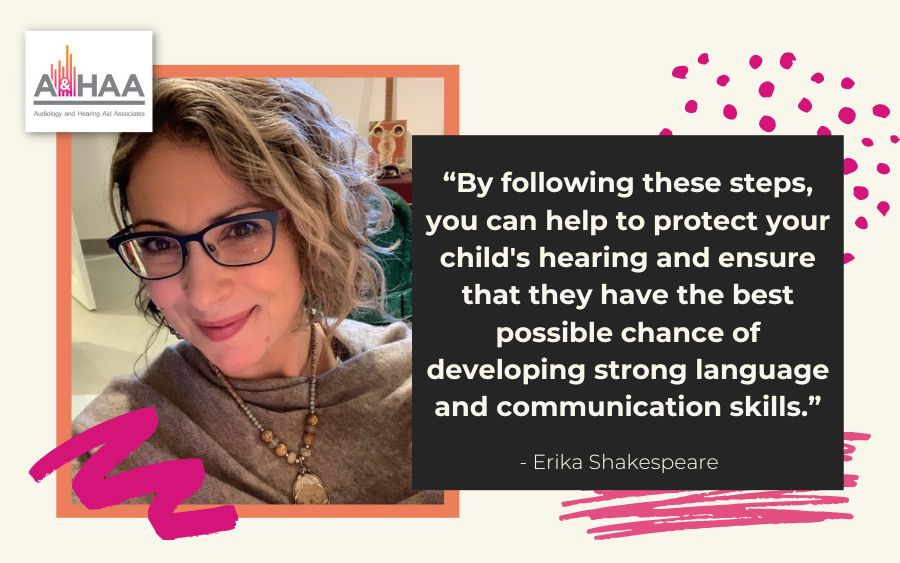
By following these steps, you can help to protect your child's hearing and ensure that they have the best possible chance of developing strong language and communication skills.
What to Do if You Are Concerned About Your Infant’s Hearing
If you are concerned about your infant's hearing, there are several steps you can take:
Consult your pediatrician: Talk to your pediatrician about your concerns and ask if they think your child's hearing should be tested.
Schedule a hearing test: If your pediatrician recommends it, schedule a hearing test with an audiologist. This may include a newborn hearing screening or further diagnostic testing.
Follow up as needed: If your child's hearing test reveals any concerns, follow up with your pediatrician and audiologist for any additional testing or treatment that may be needed.
Be observant: Observe your child's behavior. If your child doesn't respond to noises or doesn't seem to startle at loud sounds, it may be a sign of hearing loss.
Communication and Therapy: If hearing loss is confirmed, early intervention is crucial. Your child may be referred to a speech therapist or audiologist for therapy and may be fitted with hearing aids or cochlear implants.
It's important to keep in mind that hearing loss can be temporary or permanent, and early identification and intervention can make a significant difference in the outcome.
If you have any concerns about your child's hearing, it's always best to consult with a pediatrician or audiologist to rule out any issues and ensure that your child has the best chance to develop strong language and communication skills.
After helping thousands of local people in La Grande with better hearing, our team is here to help you and your family overcome hearing challenges.
Please get in touch with us if you have any concerns about your child’s hearing or want to learn more about hearing protection options.