
|
Erika Shakespeare
|
May is Better Hearing & Speech Month, a time when we focus on communication, connection, and the role hearing healthcare plays in daily life. In our clinic, we see firsthand how hearing loss can affect not only sound but also confidence, independence, and participation in everyday activities.
This month, we are sharing Kate’s story. Her experience is especially meaningful because she has lived with hearing loss since childhood. Rather than a sudden change, her journey has been lifelong, shaped by both adaptation and resilience.
For Kate, hearing care has never been about discovering something new, but about continuing to function in a world where hearing has always required extra effort. Her story reflects what many long-term hearing aid users experience, where support is ongoing rather than one-time.
At Audiology and Hearing Aid Associates, we see stories like Kate’s as a reminder that hearing healthcare is not just corrective. It is supportive, consistent, and deeply personal.
Overcoming the Stigma
Kate’s experience with hearing loss began early in life, long before she could fully understand its long-term impact.
“I was born with a hearing loss, and it has gotten worse over the years. I got my first hearing aid in 3rd grade and felt relieved that I could hear better, but also worried that I might be made fun of in school,” she said.
This combination of relief and social concern is something we hear often from patients who begin hearing support at a young age. While hearing aids provide clearer access to sound, they can also bring emotional challenges related to visibility and peer perception.
As Kate grew older, she continued to use different types of hearing aids over time, adapting as her hearing needs changed. However, with that experience came a natural question about whether newer solutions would still make a difference.
“Before contacting Audiology and Hearing Aid Associates, I wondered if the hearing aids would work well since I have worn many different kinds through the years,” she shared.
When Kate visited our clinic, she found that our team focused on understanding her full hearing history, not just her current results. This is where our comprehensive hearing assessments become especially important, as they allow us to build a complete picture of long-term hearing needs rather than treating each visit in isolation.
Kate was also impressed by the clinic environment: “When I first visited, I was impressed by how clean the place was and how thorough the staff was. They created a calm situation that could have been stressful.”
For many patients, a comforting and tidy clinical environment plays a major role in reducing anxiety, especially when hearing care has been a long-term part of their life.
The Audiology and Hearing Aid Associates Difference
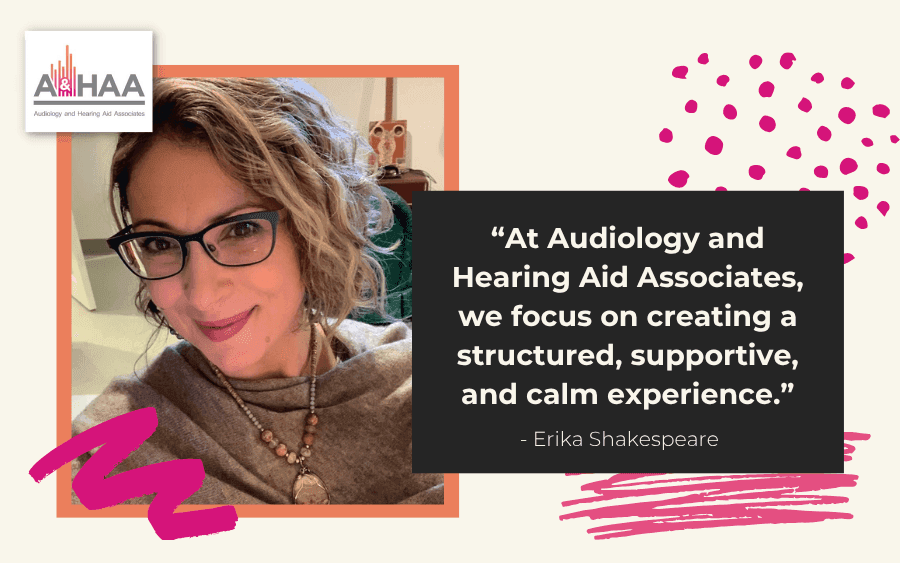
You can rest assured that our focus is on creating a structured, supportive, and calm experience for every patient who walks through our doors. Our friendly, professional team prioritizes understanding each individual’s history before making recommendations.
Kate’s experience reflects the importance of that approach. Even for someone with decades of hearing aid use, reassurance and clarity still matter.
Long-term hearing aid users often need ongoing adjustments rather than a single fitting solution, which is why our care model is built around continuity and adaptation over time.
Our advanced hearing solutions are selected based on real-world listening needs, including work environments, social settings, and daily communication demands. This ensures that patients are not only hearing more but also hearing in a way that supports their lifestyle.
For Kate, this kind of structured care helped reinforce confidence in the process and trust in ongoing support.
More Than Just a Device
For Kate, hearing care is directly tied to her independence and ability to function in daily life.
“Hearing aids have saved my life. Without them, I would not be able to work or function as well as I do,” she said.
This is one of the most important realities of hearing healthcare; while hearing aids are physical devices, their impact is deeply functional and emotional. They support communication, reduce isolation, and help maintain participation in work and daily responsibilities.
Our team often sees that the value of hearing support becomes most apparent in real-life environments rather than in testing rooms.
You will receive care and technology tailored to your specific communication needs and lifestyle demands. Our team remains dedicated to providing professional and individualized care, no matter what your ears need to succeed.
Kate’s story highlights how consistent hearing support can help sustain long-term independence, especially for individuals who have lived with hearing loss since childhood.
Accessibility in Eastern Oregon
Access to hearing care is an essential part of long-term hearing health, particularly for patients who live outside major urban centers.
Kate highlighted the importance of continued access and consistent support over time, including services that extend into her region.
She specifically appreciated the reliability and commitment of care being available beyond a traditional clinic setting, which helped maintain continuity in her hearing support. This reflects our broader commitment to accessibility and ensuring that patients can receive ongoing care without unnecessary barriers or disruption.
For many individuals, consistency in hearing care is just as important as the technology itself. Regular follow-up, maintenance, and support all contribute to better long-term outcomes.
Take Action This May
Kate’s advice is simple, direct, and powerful.
“If you are concerned about your hearing, go get a hearing test! Don’t worry about what other people might think. Wear them proudly!”
Many people delay hearing evaluations due to uncertainty or social concerns. However, hearing changes often develop gradually, making early assessment an important step in understanding what support may help.
Taking action early can help preserve communication ability, confidence, and quality of life over time. If you are noticing changes in your hearing, or if it has been some time since your last evaluation, we are here to help guide you through the next steps with clarity and care.
Take the first step toward clearer hearing today by booking a comprehensive hearing test with Audiology and Hearing Aid Associates and discover personalized support designed to help you stay connected, confident, and independent.
Frequently Asked Questions
Q: How do I know if I should get a hearing test?
A: If you find yourself asking people to repeat themselves or struggling to follow conversations in noisy environments, a hearing test can help identify whether hearing loss is present. It provides a clear baseline of your hearing ability.
Q: What happens during a hearing evaluation?
A: A hearing evaluation includes a series of simple tests that measure how well you hear different tones and speech levels. The results help guide personalized recommendations for hearing support if needed.
Q: Can hearing aids still help if I have worn them for years?
A: Yes, hearing aids can continue to be adjusted and improved over time as hearing needs change. Regular follow-up care helps ensure the devices continue to perform effectively in daily life.
Source
https://www.nidcd.nih.gov/health/hearing-aids
This source explains how hearing aids support communication and improve access to everyday sounds for individuals with hearing loss.